


So, What Actually is Branding?
Branding is the strategic process of shaping how a business is perceived, remembered, and experienced by its audience through a connected system of strategy, positioning, and identity to create consistent customer experiences and support long-term business growth.
Customers don't experience your strategy directly. They also experience the decisions your strategy creates. That's why effective branding begins long before a logo or website is ever designed.
Imagine walking down the coffee aisle at your local supermarket.
Two bags of coffee sit side by side. They're priced similarly, sourced from comparable regions, and even promise the same rich flavour. Yet, without thinking too much about it, you instinctively reach for one over the other.
Why? It probably isn't because you compared tasting notes, roast profiles, or where the beans were sourced. You chose the one that already meant something to you.
That's branding at work. Yet branding is also one of the most misunderstood concepts in business. Ask ten people what 'branding' means, and you'll probably hear answers like:
"It's your logo."
"It's your colours."
"It's your website."
"It's your marketing."
While none of these answers are entirely wrong, they're all incomplete.
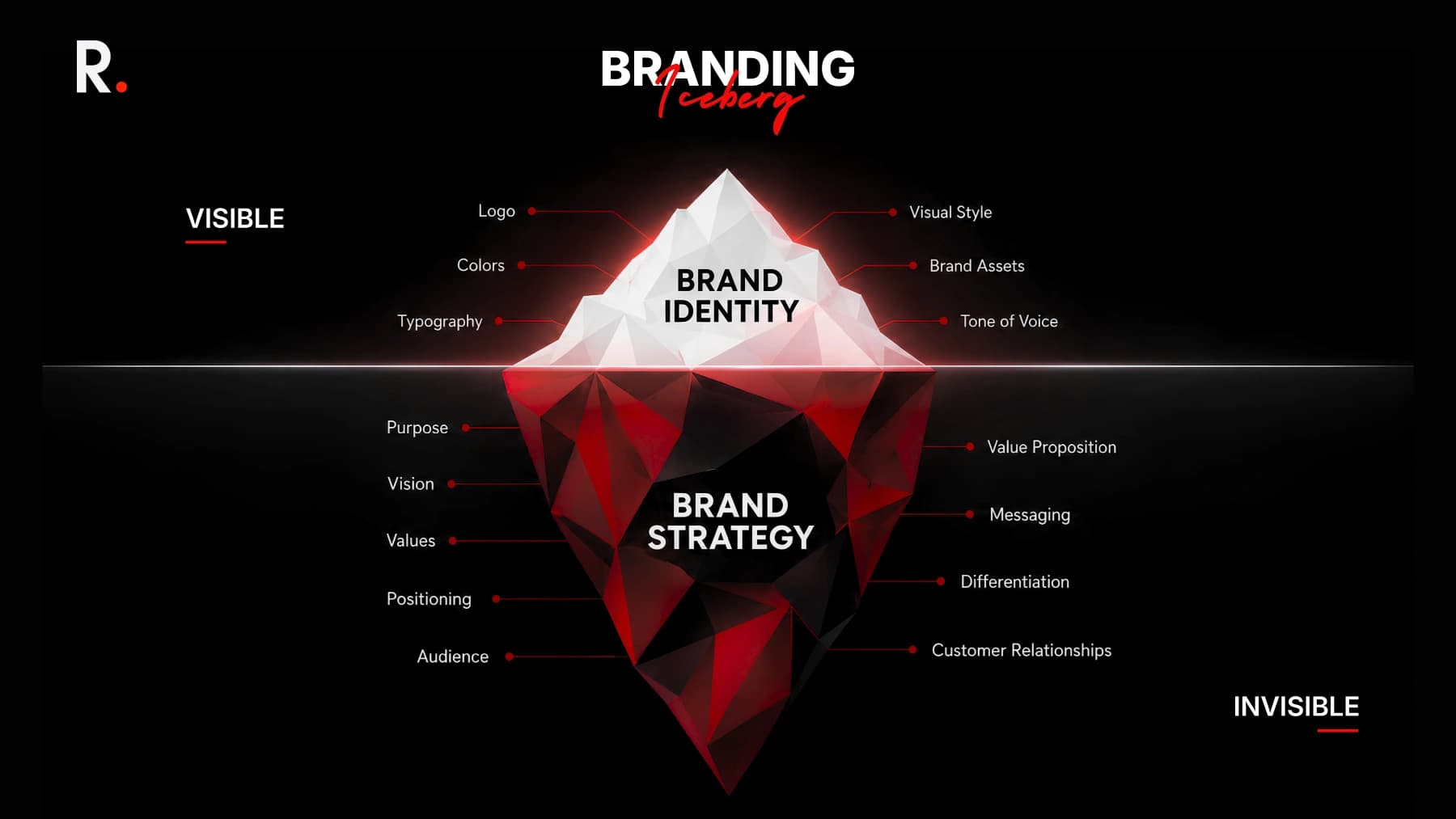
Your logo, typography, website, tone of voice, and visual style are certainly part of your brand, but they're only the parts people can see. Behind every memorable brand is a much deeper strategic foundation that shapes every visual decision, every customer interaction, and every impression people form about the business.
That's why businesses with beautiful logos sometimes struggle to stand out, while others with relatively simple visual identities become household names. The difference isn't design alone. It's the strategic thinking behind it.
What Branding Really Entails
1. Branding shapes perception. Everything else supports that goal.
At its core, branding is about influence. It’s not just manipulation, but intentionally shaping how people perceive your business.
Think about some of the brands you encounter every day.
Without seeing a product or reading a specification sheet, you probably already associate certain brands with qualities such as innovation, affordability, luxury, sustainability, reliability, or simplicity.
Those perceptions didn't happen by accident. They were built through consistent decisions over time. That's why branding shouldn't be confused with individual business disciplines like marketing or design. Each plays an important role, but none of them is branding on its own.
Marketing can attract attention, but it can't define what a business stands for. Design can make a business look professional, but it can't decide how customers should perceive it. Customer service can strengthen trust, but only when it consistently reflects the promises the brand has already made. Branding is the system that aligns all of these efforts.
2. Branding Exists to Create Meaning
Every business wants to be recognised, but the best businesses are remembered for something specific.
This is the difference branding creates. Branding creates the specific distinction.
It's not just about helping people recognise your business. It's about helping them understand why your business matters. That understanding influences everything from first impressions to customer loyalty, referrals, and long-term growth.
3. Branding Is a Business System
While branding includes a logo, a colour palette, or a tone of voice, these are outputs, not starting points.
A stronger way to think about branding is as a connected business system.
Business Goals → Strategic Decisions → Customer Perception → Business Growth
Every branding decision should support that journey.
The Three Core Elements That Build a Brand
Although branding touches almost every part of a business, three foundational elements sit at the centre of the entire system:
Brand Strategy
Brand Positioning
Brand Identity
These aren't three separate disciplines competing for attention. They're three connected layers that build upon one another.
Together, these elements help businesses answer three fundamental questions:
Core Element | The Question It Answers |
Brand Strategy | Who are we, and where are we going? |
Brand Positioning | How do we want customers to perceive us? |
Brand Identity | How do we consistently express that perception? |
Think of it like building a house. You wouldn't begin by choosing paint colours before laying the foundation.
Similarly, successful branding doesn't begin with logos or websites. It begins with understanding the business itself.
Notice something important. None of these elements exist in isolation. A strong brand identity depends on a clear brand positioning. A strong brand positioning depends on a thoughtful brand strategy.
Remove one, and the entire system becomes weaker. That's why branding isn't a checklist of individual assets. It's a sequence of connected decisions.
In the following sections, we'll explore each of these three elements, understand the role each plays within the branding system, and then bring them together to see how they create brands that customers don't just recognise but remember, trust, and choose.

Brand Strategy: Defining Direction Before Design
If branding is a system, brand strategy is the foundation it stands on.
Before a business chooses a logo, writes website copy, or launches a marketing campaign, it first needs to answer a more fundamental question:
"What do we want our brand to stand for, and why should people choose us?"
That's the role of brand strategy. Brand strategy defines the long-term direction. It aligns a business's purpose, values, audience, and competitive ambition to create a clear foundation for every branding decision that follows.
A clear brand strategy helps businesses make consistent decisions because everyone is working towards the same destination. It establishes:
The purpose behind the brand.
The audience the business wants to serve.
The values that guide decision-making and many other branding/business components.
These aren't just internal business discussions. They influence how customers experience the brand over time. Brand strategy doesn't tell a designer which colours to choose or a marketer which campaigns to run. Instead, it provides the context that makes those decisions meaningful.
Without a clear strategy, businesses often invest in branding activities that look polished but lack a clear purpose. The result is a brand that appears professional on the surface but struggles to communicate why it exists or why customers should care. And once a business knows where it's heading, another question naturally follows: "How should customers perceive it?"
That's where brand positioning comes in.
Brand Positioning: Deciding How Your Business Should Be Remembered
Having a strategy gives a business direction.
Brand positioning decides how that direction should be recognised in the market. In other words, it's about the space your business wants to occupy in customers' minds.
Brand positioning defines the unique place a business aims to hold in its customers' perception by communicating why it is different, relevant, and worth choosing over alternatives.
Notice the emphasis on perception. Positioning isn't about claiming to be the best. It's about creating a clear and believable reason for people to remember you.
Consider the difference between these two statements:
"We provide digital marketing services."
"We help growing hospitality businesses turn strategy into sustainable growth."
Both describe a business. Only one creates a more distinctive impression. That's the power of positioning.
A strong brand positioning helps answer questions such as:
What makes us different?
Which audience are we trying to attract?
Why should customers choose us instead of competitors?
What promise do we want people to associate with our brand?
These answers should naturally build upon the brand strategy established earlier.
Strategy defines where the business wants to go.
↓
Positioning determines how the business should be understood on that journey.
Without positioning, businesses often blend into crowded markets. They may offer excellent products or services, yet customers struggle to explain what makes them different from the dozens.
Perception shapes who pays attention, who remembers the business, and ultimately who becomes a customer. Positioning also bridges strategic thinking and visible expression.
Once a business knows how it wants to be perceived, it needs a consistent way to communicate that perception across every customer touchpoint. That's the role of brand identity.
Brand Identity: Bringing Strategy and Positioning to Life
Brand identity is often the first thing people think about when they hear the word branding. Ironically, it's also where much of the confusion begins.
A logo is not branding. A colour palette is not branding. A website isn't branding either. They're all important, but they're expressions of something deeper.
Brand identity is the collection of visual and verbal elements that consistently communicate a brand's strategy and positioning across every interaction.
It's how people recognise your business. It's also how they begin to connect what they see with what they experience. Brand identity can include elements such as:
Logos and visual marks.
Colour palettes and typography.
Photography and illustration styles.
Tone of voice and messaging.
Website design and digital experiences.
Brand guidelines that help maintain consistency.
Notice that none of these elements exist to make a business look attractive for its own sake. Their purpose is to express the strategic decisions that have already been made.
Imagine a boutique law firm that positions itself around clarity, trust, and approachable legal advice.
Its identity might feature clean typography, straightforward language, calm colours, and an uncluttered website. This is not because those choices are fashionable, but because they reinforce the perception the business wants to create.
Now imagine the same firm using loud colours, playful illustrations, and informal messaging. Individually, those design choices may still be well executed. Collectively, they send a conflicting message.
That's why brand identity should never be viewed in isolation. Its effectiveness depends on the quality of the strategy beneath it and the positioning it's designed to communicate.
When strategy defines the direction and positioning shapes perception, brand identity ensures customers encounter those decisions consistently, even if they're visiting a website, reading social media content, or walking into your premises.
These three elements depend on one another to create a brand that people recognise, trust, and remember. This is where branding transforms from a collection of concepts into a connected business system. It's the relationship between these elements that ultimately determines whether a brand feels coherent or confusing.

How Brand Strategy, Positioning, and Brand Identity Work Together
Understanding brand strategy, positioning, and identity individually is valuable. Understanding how they work together is what transforms branding from a collection of visuals into a strategic system.
This is where many businesses unintentionally go wrong.
They invest in a new logo.
Refresh their website.
Rewrite their marketing copy.
Launch a social media campaign.
Yet months later, they wonder why customers still struggle to understand their business’s uniqueness.
The problem often isn't the quality of the work. It's that each activity was treated as a separate project instead of part of one connected branding system.
Strong branding doesn't happen because individual elements are well executed. It happens because every element reinforces the one before it. Every stage influences the next. Skip one, and the entire system becomes less effective. Let's break that journey down.
1. It All Starts with Business Goals
Before branding begins, every business has objectives.
Perhaps the goal is to become the leading specialist in a niche market. Maybe it's attracting higher-value clients. Or perhaps it's expanding into a completely new audience. These business ambitions provide the context for every branding decision that follows. Without clear goals, branding becomes reactive.
Businesses often end up making isolated decisions based on trends, competitor activity, or personal preference rather than long-term direction. Branding should always support where the business wants to go, not just how it wants to look today.
2. Strategy Gives the Brand Direction
Once the goal is clear, brand strategy defines the path. It establishes the brand's purpose, audience, values, and long-term direction.
Think of strategy as answering the question: "Who are we becoming?"
Every future branding decision should align with that answer. Without strategic direction, it's surprisingly easy for brands to become inconsistent.
One campaign communicates innovation. The next focuses on affordability. Another highlights premium quality. Individually, each message might sound compelling. Together, they leave customers unsure of what the business truly represents.
Strategy keeps every decision pointing in the same direction. But direction alone doesn't create recognition. Customers also need a reason to remember the brand. That's where positioning comes in.
3. Positioning Shapes Customer Perception
If brand strategy determines where the business is going, brand positioning determines how customers should think about it. Positioning translates internal business decisions into an external perception.
Positioning asks, "What should people remember about us?"
That's an important distinction. Most industries are crowded. Businesses often offer similar services, similar pricing, and similar promises. Customers rarely remember every feature. They remember a feeling. A clear reason to choose one business over another.
Positioning creates that mental shortcut. And once a business understands the perception it wants to create, it needs to communicate that perception consistently.
That's where brand identity takes over.
4. Identity Makes the Brand Tangible
Brand identity is where customers begin interacting with the brand. It's the website they browse. The emails they receive. The packaging they open. These touchpoints are often the first things customers notice.
But they shouldn't be the first things a business creates.
Identity is most effective when it reflects decisions that have already been made through strategy and positioning. That's why successful brands often feel remarkably consistent.
Every small detail reinforces the same perception. Customers may never consciously notice this consistency. But they certainly notice its absence.
Branding Works Best When Every Layer Supports the Next
A useful way to think about branding is as a chain rather than a checklist.
Element | Primary Role | Builds Upon |
Business Goals | Define where the business wants to grow | — |
Brand Strategy | Creates direction | Business Goals |
Brand Positioning | Shapes perception | Brand Strategy |
Brand Identity | Expresses the brand | Strategy + Positioning |
Marketing | Communicates the brand | Brand Identity |
Customer Experience | Reinforces expectations | Marketing + Identity |
Business Growth | Result of consistent branding | Everything above |
Here, each element strengthens the next.
Want to create a brand that defines your business? Check out the RestoRefine branding services →
What Happens When One Branding Element Is Missing?
One weak link can affect the entire branding system. Let's look at a few examples.
Scenario 1: Strong Identity, Weak Strategy
A business launches with a beautifully designed logo, a premium website, and polished marketing materials. Customers are impressed. But after interacting with the business, they struggle to explain what it actually stands for. The brand looks professional, but there’s no meaning in what they’re doing. Without strategy, visual identity becomes decoration rather than communication.
Scenario 2: Strong Strategy, Weak Positioning
A business has a clear purpose and ambitious goals. Internally, everyone understands where the company wants to go. Externally, however, customers can't distinguish it from competitors. The business knows who it is. The market doesn't. Without positioning, even strong strategies can become invisible.
Scenario 3: Strong Strategy and Positioning, Weak Identity
Now imagine a business with a compelling strategy and a clearly differentiated position. But its website feels outdated. Its messaging changes from platform to platform. Its visual identity lacks consistency. Customers receive mixed signals. Trust becomes harder to build because the experience doesn't reinforce the promise. Without identity, great strategic thinking struggles to become memorable.
Understanding how branding works as a system also makes it easier to spot common misconceptions. Many businesses don't struggle because they ignore branding altogether. They struggle because they misunderstand what branding actually involves.
Common Branding Misconceptions
By now, one thing should be clear: branding is much more than a logo.
Yet several misconceptions continue to shape how businesses approach branding. Many organisations invest heavily in visual design or marketing campaigns without first establishing the strategic foundations that make those efforts meaningful.
Let's separate a few common myths from reality.
Myth | Reality |
Branding is just a logo. | A logo is part of brand identity. Branding is the broader system that shapes how people perceive and experience a business. |
Branding and marketing are the same thing. | Branding defines who you are and what you stand for. Marketing communicates the brand to the right audience. |
Branding only matters for large companies. | Businesses of every size benefit from clear branding because customers make decisions based on perception, trust, and recognition, not company size. |
A new logo is the same as a rebrand. | Changing visual assets alone isn't necessarily rebranding. A genuine rebrand often reflects changes in strategy, positioning, or business direction. |
The reality is vastly different, as seen here.
Myth 1: Branding Is Just a Logo
This is probably the most common misconception. Logos are highly visible, so they're often mistaken for the brand itself. In reality, a logo is simply one expression of brand identity. Without brand strategy and positioning behind it, even the most beautifully designed logo has very little meaning. A memorable brand isn't created because people recognise a symbol. People recognise the symbol because they've consistently experienced everything it represents.
Myth 2: Branding Is the Same as Marketing
Branding and marketing work closely together, but they solve different problems. Branding answers questions like "Who are we?" and "How do we want to be perceived?" Marketing asks a different question, like, “How do we communicate that effectively to the right audience?” A helpful way to remember the difference is this: Branding creates meaning, while marketing shares that meaning. Strong marketing becomes significantly easier when the underlying brand is already clear.
Myth 3: Branding Is Only for Big Businesses
Some business owners believe branding becomes important only after a company grows. The opposite is often true. Early-stage businesses arguably benefit the most from strategic branding because they're competing for attention in crowded markets. Clear branding helps customers understand why the business exists and why they should choose it from the very beginning. Whether you're an independent consultant, a local café, or a growing technology company, branding influences how quickly people understand, trust, and remember your business.
Myth 4: Branding Ends Once the Design Is Finished
Many businesses treat branding like a one-time project. The logo is approved. The website launches. The brand guidelines are saved. Project complete. In reality, branding is something customers experience continuously. Every interaction either reinforces or weakens the perception you're trying to build. That's why branding extends beyond visual identity.
As your brand matures, elements such as 'brand messaging', 'brand voice', and 'brand guidelines' help ensure every communication feels consistent, while 'brand experience' brings those decisions to life through customer interactions.
These aren't separate from branding. They're extensions of the same strategic system. And like brand identity, they become most effective when they're grounded in a clear brand strategy and brand positioning.
Where Should Businesses Start with Branding?
The answer might be surprising.
Branding doesn't begin when a designer opens Figma. It doesn't begin with brainstorming logo ideas. And it doesn't begin with choosing colours or fonts.
Effective branding starts by understanding the business itself. Only then can every branding decision support a clear purpose and direction.
A simple way to think about the process is this:
Business Goals → Brand Strategy → Brand Positioning → Brand Identity → Brand Messaging → Marketing → Customer Experience
Every step builds upon the one before it. Trying to skip ahead often creates unnecessary problems later.

Branding Is an Ongoing Process, Not a One-Time Project
One of the biggest shifts businesses can make is viewing branding as something they continuously strengthen rather than something they complete.
Markets change. Customer expectations evolve. Businesses grow into new services and audiences. As that happens, branding evolves too.
Sometimes that means refining brand messaging. Sometimes it means updating brand guidelines to improve consistency. Occasionally, it may even lead to a broader rebranding effort when the business itself has fundamentally changed.
The important thing is that these decisions continue to build upon the same strategic foundation rather than starting from scratch each time. When these elements work together, branding becomes more than a visual exercise. It becomes a competitive advantage.
A logo might help people recognise your business. But branding is what gives them a reason to remember it. And when every part of your brand works together, recognition becomes trust, trust becomes preference, and preference becomes long-term growth.
The strongest brands don't stay relevant because they remain unchanged. They stay relevant because they evolve without losing clarity about who they are.
Frequently Asked Questions
What is branding?
Branding is the strategic process of shaping how a business is perceived by its audience. Rather than focusing only on logos or visual design, branding combines brand strategy, positioning, and identity to create a consistent and memorable customer experience that supports long-term business growth.
What are the core elements of branding?
The three core elements of branding are Brand Strategy, Brand Positioning, and Brand Identity. Together, they define a business's direction, shape how it is perceived in the market, and determine how it is consistently expressed across every customer touchpoint.
Why is branding more than a logo?
A logo is only one visible expression of a brand. Effective branding begins long before design by defining a business's purpose, positioning, messaging, and personality. Visual identity communicates those decisions. It doesn't create them.
Why is branding important for a business?
Branding helps businesses build recognition, trust, and differentiation in competitive markets. A clear brand also creates consistency across marketing, customer experiences, and communication, making it easier for customers to remember, choose, and recommend the business.
How do Brand Strategy, Brand Positioning, and Brand Identity work together?
Brand strategy establishes a business's direction and purpose. Brand positioning determines how the business wants to be perceived by its audience. Brand identity then expresses those decisions through visual and verbal elements. Together, they form the strategic system that creates effective branding.
What comes first in branding?
Brand strategy comes first because it provides the foundation for every branding decision. Once a clear strategy is established, businesses can define their market position before developing a brand identity that communicates those choices consistently.
Can a business have branding without a strategy?
A business can have visual branding without a clear strategy, but it rarely creates a strong or memorable brand. Without strategic direction, design decisions often become inconsistent, making it harder to build trust, differentiation, and long-term recognition.
What's the difference between branding and brand identity?
Branding is the complete strategic system that shapes how a business is perceived. Brand identity is one part of that system and focuses on expressing the brand through visual and verbal elements such as logos, colours, typography, imagery, and tone of voice.
What makes a successful brand?
A successful brand is built on more than attractive visuals. It combines a clear brand strategy, a distinctive brand positioning, and a consistent brand identity to create meaningful customer experiences. When these elements work together, businesses are better positioned to build trust, strengthen recognition, and support long-term growth.